Values at Sea Workshop 2023
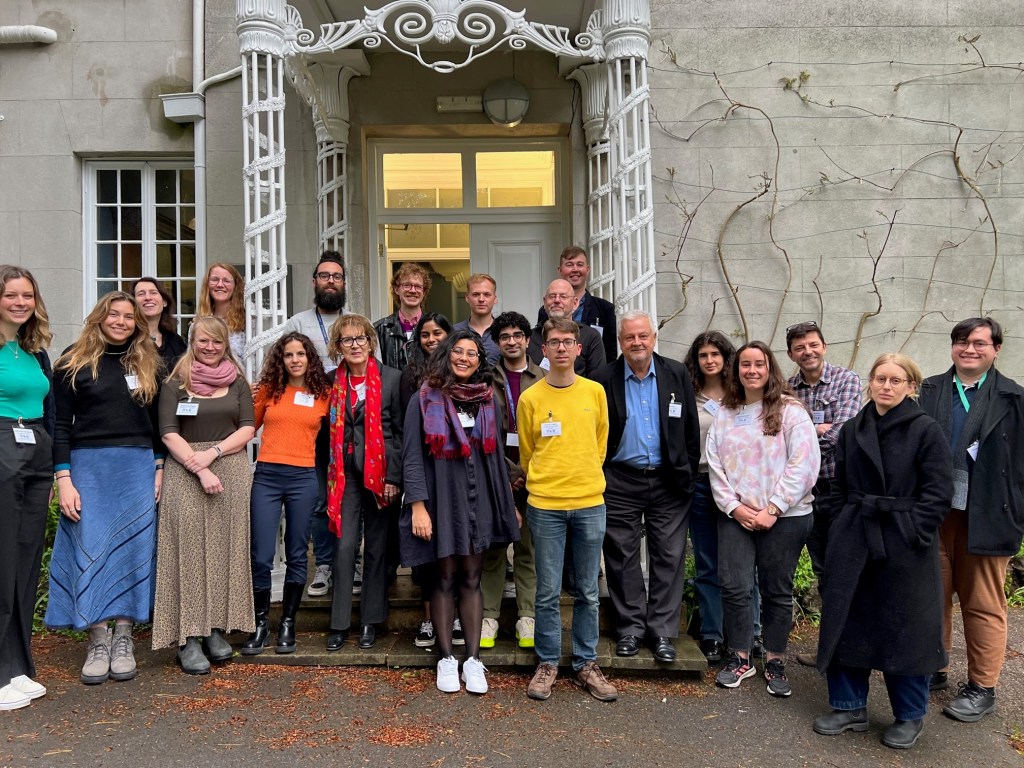
On 27-28th April 2023 Exeter’s Egenis Centre brought together people from marine sciences and the philosophy, social studies, history and anthropology of marine science, for an interdisciplinary workshop focused on the value of marine systems. It was funded and supported by the South West Doctoral Training Partnership, Marie Skłodowska-Curie Action 885794, the Egenis Centre for the Study of Life Sciences and the journal History and Philosophy of the Life Sciences.
See more information about the workshop below: Event description | List of talks | Schedule | Public Talk | Networking Event
Whilst the event is now over, you can see Stefan Helmreich’s keynote lecture on Youtube, and there are a number of outputs from the event. Click the links below to see more:
- Stefan Helmreich’s keynote talk – watch on Youtube
- an edited volume of the journal History and Philosophy of the Life Sciences – see call for papers
- Marine science studies mailing list – https://groups.google.com/g/marinesciencestudies
- Values at sea podcast series, with interviews from workshop speakers – available on all major podcast platforms – see podcast page for more information
Jump to: Top of Page | Event description | List of talks | Schedule | Public Talk | Networking Event
Event description:
International Workshop – Values at sea: Science Studies meets Marine Biology
Please note this event has now taken place
Registration now open: https://www.eventbrite.co.uk/e/523035532357
Across many disciplines, attention is increasingly focused on the sea. This is no surprise: it is a site of immense value, supporting and shaping the global biosphere, and is under considerable threat. Whilst ocean ecosystems are pushed to the brink, scholars now often talk of the blue humanities and oceanic turns, of blue economics and accelerations, and of ocean decades. These trends necessitate a similar refocusing towards the sea in the history, philosophy, and social studies of science, fields that are well placed to help understand and contextualise some of the changes occurring to marine systems. To facilitate the emergence of social studies of marine life, as well as the integration of such scholarship with biological and ecological research, this two-day seminar will bring together people engaged in and focused on interactions between scientists and the sea. The discussion will centre on values in marine contexts: that is, the ways in which oceans and ocean life come to matter to humans and other species.
Aims
By bringing together those working within marine sciences, those studying the work done in those sciences, and those offering other perspectives on the sea, we aim to nurture and strengthen cross-disciplinary understandings of how the ocean is, has been, and can be valued. Talks are invited from ecology and social sciences to present work on the biology and ecology of the sea and its interactions with people, as well as from science studies to discuss how knowledge and value are produced in these contexts.
Time and Place
This workshop will take place on Exeter University’s Streatham Campus, 27th-28th April 2023. The workshop will also be streamed online, though active participation from online attendees will be limited due to the in-person nature of the event. Attendance and catering for registered participants will be free thanks to the generous support of the South West Doctoral Training Partnership, Marie Skłodowska-Curie Action 885794, the Egenis Centre for the Study of Life Sciences and History and Philosophy of the Life Sciences.
Organisers: Elis Jones, Sabina Leonelli, Jose Cañada, Sophia Barlow
To register visit https://www.eventbrite.co.uk/e/523035532357
For questions and information, please contact Elis Jones erj205@exeter.ac.uk or Jose Cañada J.Canada@exeter.ac.uk
Themes: marine science, marine and coastal spaces, value, conservation, marine wellbeing, science studies, socio-ecology
Jump to: Top of Page | Event description | List of talks | Schedule | Public Talk | Networking Event
Talks:
Christiane Groeben, Stazione Zoologica Anton Dohrn, Naples, Italy
‘Knowledge from the Sea – Knowledge for the Sea: 150 years of marine biology at the Stazione Zoologica Anton Dohrn’
About the speaker: Christiane Groeben is an archivist, philologist and historian of science. From
1969 to 2010 she has implemented the Historical Archives of the Naples Zoological Station. She has
been book review editor and managing editor of History and Philosophy of the Life Sciences and has
served as council member for the International Society for the History, Philosophy and Social Studies
of Biology and the German Society for the History and Theory of Biology (DGGTB). In 2022, she has
been awarded the Ilse Jahn Honorary Prize of the DGGTB. In 2022 she has been nominated
Ambassador to the 150th Anniversary Events of the Stazione Zoologica Anton Dohrn. Her research
interests focus on the history of the Naples Station, its founder Anton Dohrn and the people and
factors that soon turned the Naples Station into a permanent congress of Zoology
James Guest, Coral Assist Lab, University of Newcastle, UK
‘Selective breeding for heat tolerance as a tool to enhance coral reef resilience’
About the speaker: My research interests are diverse within coral reef science but primarily focus on
reproductive and larval ecology, long-term ecological change, coral bleaching and restoration
ecology and include use of various techniques ranging from large scale manipulative field
experiments to molecular biology using state-of-the art ‘omic techniques. I have lived in five
countries and worked with a diverse group of scientists from a range of disciplines in large,
international multi-disciplinary research groups.
Stefan Helmreich, Anthropology, Massachusetts Institute of Technology, USA
‘Ocean Waves, Ocean Science, Ocean Media’
About the speaker: Stefan Helmreich received his PhD in Anthropology from Stanford University and
prior to coming to MIT held fellowships at Cornell, Rutgers, and NYU. His research examines how
biologists think through the limits of “life” as a category of analysis. Alien Ocean: Anthropological
Voyages in Microbial Seas (2009) is a study of marine biologists working in realms usually out of sight
and reach: the microscopic world, the deep sea, and oceans outside national sovereignty. This book,
winner of the 2017 J.I. Staley Prize from the School of Advanced Research, the 2012 Rachel Carson
Book Prize from the Society for Social Studies of Science, the 2010 Senior Book Prize from the
American Ethnological Society, and the 2010 Gregory Bateson Book Prize from Society for Cultural
Anthropology charts how marine microbes are entangled with debates about the origin of life,
climate change, property in the ocean commons, and the possibility of life on other worlds. An
earlier book, Silicon Second Nature: Culturing Artificial Life in a Digital World (1998) is an
ethnography of computer modelling in the life sciences. In 2000, it won the Diana Forsythe Book
Prize from the American Anthropological Association. Helmreich’s newest book, Sounding the Limits
of Life: Essays in the Anthropology of Biology and Beyond (2016) asks after changing definitions of
life, water, and sound (and features a soundtrack). He is at work on a new book about wave science,
in domains ranging from oceanography to cosmology to medicine to acoustics to social theory
Presentations:
Beyond shifts: Sources of variation in the baselining process – Elis Jones, Egenis Centre, University of Exeter, UK
Brackish Knowledge: thinking with in-betweenness in numerical modelling of the coastal ocean – Jacqueline Ashkin, Thomas Franssen, and Sarah de Rijcke; Leiden University, Netherlands
How is wellbeing mobilised in UK marine policy and practice? – Sophia Buchanan Barlow, University of Exeter, UK
Is Coral Restoration a Worthwhile Tool for Conserving Coral Reefs in the Anthropocene? A Synthesis of Current Opinions – Skylar Collins, University of Exeter, UK
Do Super Corals Dream of Simulated Seas? – Damien Bright, Research Institute for Sustainability, Helmholtz Centre Potsdam, Germany
Mapping Biodiversity in the Deep Ocean – Vincent Cuypers, Research Group Zoology: Biodiversity and Toxicology, Centre for Environmental Sciences, Hasselt University, Diepenbeek, Belgium. Centre for Logic and Philosophy of Science, KU Leuven, Leuven, Belgium.
Data Bias in Data Fusion: Towards Contextualised Ground Truth in Ocean Carbon Transport Prediction – Abhiraami Navaneethanathan, University of Exeter, UK
The Reef as Rock: The History of Mining & Ecology in Sri Lanka, 1950-1998 – Kamil Ahsan, Yale University, USA
Posidonia Oceanica as a driver for socioenvironmental politics in the Balearic Islands – Jose Cañada, Department of Sociology, Philosophy and Anthropology, University of Exeter, UK
Soundscapes in the Ocean – Modan-Lou Tonietto and Sophie Nedelec, University of Exeter, UK
Role of cold-water coral reefs and future directions in research – Laurence H. De Clippele, The University of Edinburgh, School of GeoSciences, Changing Oceans Research Group, Edinburgh, UK
“All we need is nets”: Plankton sachets and scientific cooperation at the time of the Cold War – Alessandra Passariello, Stazione Zoologica Anton Dohrn, Naples, Italy
Roundtable Discussion:
Marine conservation and public participation: Towards multistakeholder engagement
This roundtable brings different perspectives on how societal actors engage in marine conservation in productive ways. Caring for marine environments requires the involvement of many societal actors: academia, civil society, the public, administrators, private sector, to name a few. Each discussant will reflect on how, based on their own experience, their discipline or area of work can or has contributed to participation and engagement. The roundtable will put special emphasis on issues of justice, inequality and ethics. Information on participants below:
Pamela Buchan, Research Fellow, Department of Geography, University of Exeter
Dr Pamela Buchan is a Research Fellow at the University of Exeter where she undertakes prize-winning, impact-focused, marine social scientific research, particularly focused on marine citizenship and marine identity. Pamela’s research is informed by her former role as a Plymouth City Councillor, and current positions as Vice Chair of the Devon & Severn IFCA and Cattewater Harbour Commissioner. Pamela used her research findings to develop the local government Ocean Recovery Declaration, or Motion for the Ocean, and is currently collaborating with the Plymouth Sound National Marine Park to develop interventions and evaluation aimed at marine citizenship and greater civic participation.
Laurence H. De Clippele, The University of Edinburgh, School of GeoSciences, Changing Oceans Research Group, Edinburgh, UK
Dr Laurence De Clippele is a marine ecologist who focuses on studying deep-sea habitats, specifically cold-water coral reefs and sponge grounds. She has an interest in understanding how biodiversity changes in time and space, using visual, acoustic and bathymetric data. Currently, she works as part of the European Horizon 2020 iAtlantic project, a multidisciplinary research programme seeking to assess the health of deep-sea and open-ocean ecosystems across the full span of the Atlantic Ocean. She also aims to build a stronger relationship and a two-way dialogue between science and society, which she does through art-science collaborations and public engagement activities.
David Santillo, Senior Scientist, Greenpeace Research Laboratories, Exeter
Dr David Santillo obtained a degree in marine and freshwater biology in 1989, and a PhD in marine microbial ecology in 1993, both from the University of London, before continuing with postdoctoral research into nutrient pollution in the Adriatic Sea. A senior scientist, David joined the Greenpeace Research Laboratories in 1994, and now has almost 25 years of experience in environmental forensics analysis and the development of policies for environmental protection, including representation of Greenpeace at various international treaties and conventions relating to protection of the marine environment.
Astrid Schrader, Senior Lecturer, Department of Sociology, Philosophy and Anthropology, University of Exeter
Astrid Schrader is a senior lecturer at the University of Exeter in the department of Sociology, Philosophy and Anthropology. She works at the intersections of feminist science studies, human-animal studies, new materialisms, and posthumanist theories. Her work explores questions of responsibility, care and agency in scientific knowledge production, new ontologies, the relationship between anthropocentrism and conceptions of time, and questions of environmental justice. Astrid has been particularly interested in scientific research on marine microbes. Under the heading of “Caring with Haunted Microbes” she develops new theoretical approaches in STS, combining ‘agential realism’ and ‘biodeconstruction’. Working with artists and marine scientists, she also seeks to develop new approaches to and methodologies in cross-disciplinarity based on the notion of diffraction.
Jump to: Top of Page | Event description | List of talks | Schedule | Public Talk | Networking Event
Schedule:
Day 1 – Thurs 27th April
| 10:30 – 11:00 | Welcome | Elis Jones and John Dupre (Exeter) |
| 11:00 13:00 – | Talks 1 (x4) | Elis Jones (Exeter), Jackie Ashkin (Leiden), Sophia Barlow (Exeter), Skylar Collins (Newcastle). Chair: Rose Trappes (Exeter) |
| 13:00 – 14:00 | Lunch | |
| 14:00 – 15:00 | Keynote 1 | Christiane Groeben (Stazione Zoologica Anton Dohrn, Naples). Chair: John Dupré (Exeter) |
| 15:00 – 15:30 | Break | |
| 15:30 – 17:00 | Talks 2 (x3) | Damien Bright (RIFS Potsdam), Vincent Cuypers (Hasselt), Abhiraami Navaneethanathan (Exeter). Chair: Celso Neto (Exeter) |
| 17:00 – 17:30 | Break | |
| 17:30 – 18:30 | Keynote 2 | James Guest (Coral Assist Lab, Newcastle University). Chair: Elis Jones (Exeter) |
Day 2 – Fri 28th April
| 09:30 – 11:00 | Public keynote | Stefan Helmreich (MIT). Chair: Sabina Leonelli. Held at Streatham Court Lecture Theatre C. |
| 11:00 – 11:30 | Break and walk to Byrne House | |
| 11:30 – 13:00 | Talks 3 (x3) | Kamil Ahsan (Yale), Jose Cañada (Exeter), Modan-Lou Tonietto (Exeter). Chair: Elis Jones |
| 13:00 – 14:00 | Lunch | |
| 14:00 – 15:00 | Talks 4 (x2) | Laurence de Clippele (Edinburgh), Alessandra Passariello (Stazione Zoologica Anton Dohrn, Naples). Chair: Sophia Buchanan Barlow |
| 15:00 – 15:30 | Break | |
| 15:30 – 17:00 | Roundtable discussion | Astrid Schrader (Exeter), Pamela Buchan (Exeter), David Santillo (Greenpeace), Laurence de Clippele (Edinburgh). Chair: Jose Cañada |
| 17:00 – 17:30 | Wrap up discussion | Chair: Jose Cañada |
Jump to: Top of Page | Event description | List of talks | Schedule | Public Talk | Networking Event
Public Talk:
This talk was recorded – see the video on the Egenis Youtube Playlist
As part of this event there will be a public talk on the University of Exeter’s Streatham campus, and also streamed online. Details for the talk are below.
Registration is available via EventBrite.
Public Talk – Ocean Waves, Ocean Science, Ocean Media – Stefan Helmreich
How do oceanographers apprehend ocean waves? This presentation draws on anthropological work I undertook among wave scientists in the United States to argue that what oceanographers take ocean waves to be has been strongly imprinted by the techniques, technologies, and media — maritime, photographic, filmic, information theoretic — through which waves have come to be known. I offer an account of ethnographic fieldwork I conducted on board the Floating Instrument Platform (FLIP), a seagoing vessel managed by the Scripps Institution of Oceanography, in La Jolla, California. FLIP is a singular vessel, one that, once at sea, can “flip” 90 degrees into a vertical position —with all the instrumentation inside swiveling correspondingly—to become a stable platform from which to measure wave action. Moving from an examination of the contemporary use of infrared and laser imaging to study waves from FLIP, I place the platform within a longer history of wave science, reaching back into the Cold War, when ocean observation projects were conditioned by nuclear-age American maritime expansion, particularly in the Pacific. I then flip to the recent present, as scientists turn from understanding waves not only as a kind of infrastructure for maritime networks, but also as avatars of anthropogenic climate change.
About the event:
The event will be held in person in Streatham Court C, on Exeter University’s Streatham Campus on 28th April 2023, 9:30-11:00am, and will also be streamed online. The talk will be one hour, followed by half an hour Q&A. Funding for this event is generously provided by the South West Doctoral Training Partnership, Marie Skłodowska-Curie Action 885794, the Egenis Centre for the Study of Life Sciences and History and Philosophy of the Life Sciences.
Register here https://www.eventbrite.co.uk/e/stefan-helmreich-ocean-waves-ocean-science-ocean-media-public-lecture-tickets-522142531367
About Professor Helmreich:
Stefan Helmreich received his PhD in Anthropology from Stanford University and prior to coming to MIT held fellowships at Cornell, Rutgers, and NYU. His research examines how biologists think through the limits of “life” as a category of analysis. Alien Ocean: Anthropological Voyages in Microbial Seas (University of California Press, 2009) is a study of marine biologists working in realms usually out of sight and reach: the microscopic world, the deep sea, and oceans outside national sovereignty. This book, winner of the 2017 J.I. Staley Prize from the School of Advanced Research, the 2012 Rachel Carson Book Prize from the Society for Social Studies of Science, the 2010 Senior Book Prize from the American Ethnological Society, and the 2010 Gregory Bateson Book Prize from Society for Cultural Anthropology charts how marine microbes are entangled with debates about the origin of life, climate change, property in the ocean commons, and the possibility of life on other worlds. An earlier book, Silicon Second Nature: Culturing Artificial Life in a Digital World (University of California Press, 1998) is an ethnography of computer modeling in the life sciences. In 2000, it won the Diana Forsythe Book Prize from the American Anthropological Association. Helmreich’s newest book, Sounding the Limits of Life: Essays in the Anthropology of Biology and Beyond (Princeton University Press, 2016) asks after changing definitions of life, water, and sound (and features a soundtrack). He is at work on a new book about wave science, in domains ranging from oceanography to cosmology to medicine to acoustics to social theory. Helmreich’s essays have appeared in Critical Inquiry, Representations, American Anthropologist, Cabinet, and The Wire.
See more about Professor Helmreich here https://anthropology.mit.edu/people/faculty/stefan-helmreich
Jump to: Top of Page | Event description | List of talks | Schedule | Public Talk | Networking Event
Networking event:
As part of the run up to the workshop we are guest hosting an online speed networking event for marine researchers. The event is organised by Ocean Partnerships and the Sustainable Management of UK Marine Resources project. See below for more information.
Ocean Partnerships Speed Networking Event – Blue Humanities, Marine Science and Science Studies: Interdisciplinary Dialogues – 19th April, 1-2pm, Online
Ocean Partnerships meet monthly for lunchtime speed networking where attendees get to meet people from different disciplines and sectors to spark up new ideas for future collaboration! Each month has a different theme to help start the conversation. This month’s theme has been chosen Elis Jones from the University of Exeter. Join us on the 19nd April 1-2pm to discuss Blue Humanities, Marine Science and Science Studies. Sign up via the link here: https://us02web.zoom.us/meeting/register/tZYtdemsrTkqH9aNWf6LmKeieSLc6NfJCqEa
Session Description
Many disciplines across science and the humanities are seeing increasing engagement with the ocean. This includes disciplines sometimes called the ‘Blue Humanities’, as well as those which study the practice of science itself, including philosophy, history and social studies of science, broadly termed ‘Science Studies’. This speed networking session will bring together people from marine science with those from these disciplines to discuss and engage with each other’s work, and to get a sense for the exciting developments taking place across the full breadth of ocean scholarship.
Ocean Partnerships
Join Ocean Partnerships a network of over 300 scientists, artists, policymakers, science communicators and more… who are interested in the marine environment and the people and communities that rely upon it. Sign up to our mailing list to be keep up to date with the latest events: https://mailchi.mp/345558664bbf/ocean-partnerships-network
Jump to: Top of Page | Event description | List of talks | Schedule | Public Talk | Networking Event


 Marine Science Studies